
How Many Stage Lights Do You Need for an Event?
Jul 24th 2026
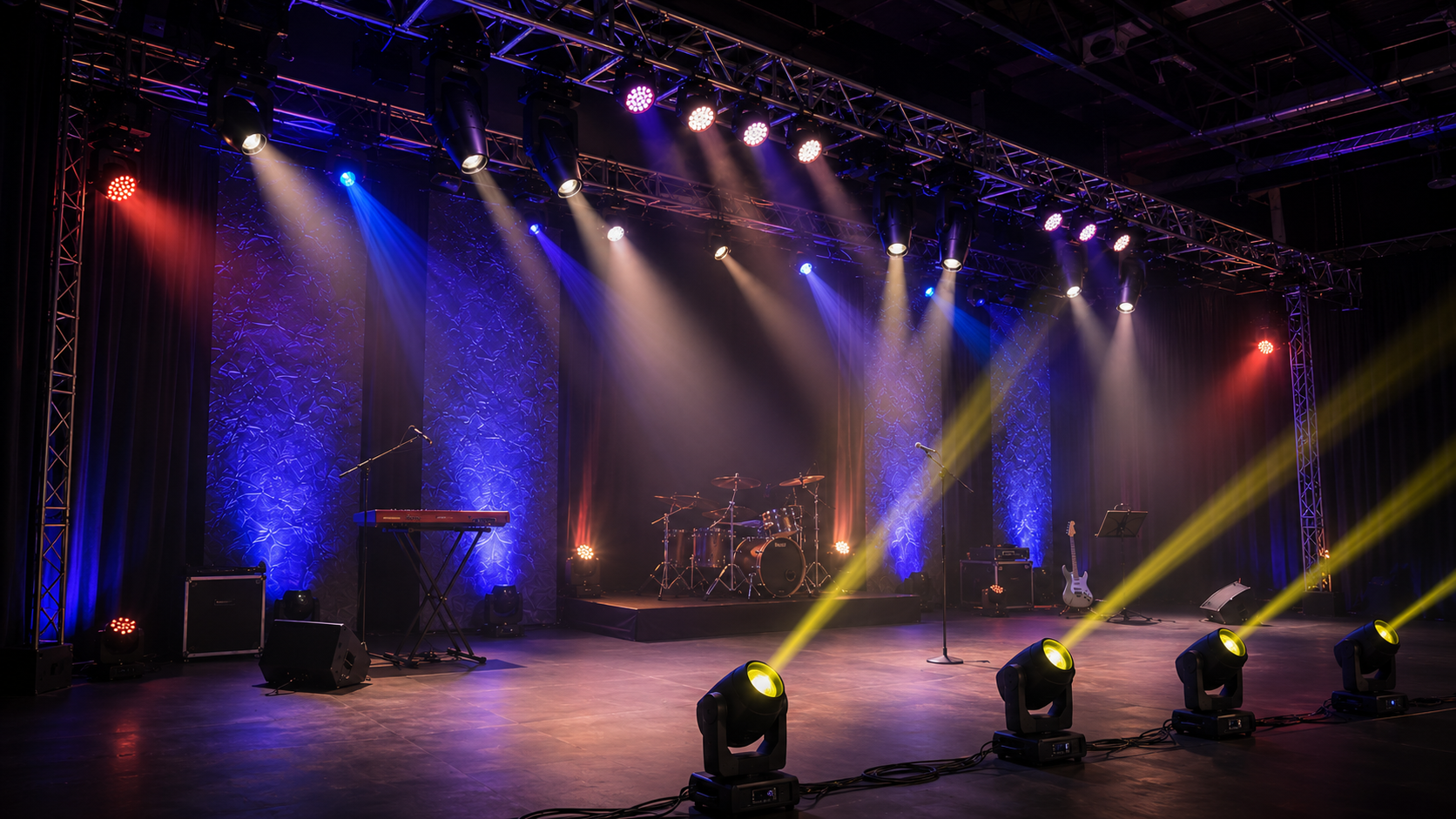
How Many Stage Lights Do You Need for an Event?
Most small stages need approximately 4-8 fixtures, medium stages often use 8-16, and large productions may require 16 or more. These figures are starting points, not fixed rules. The correct quantity depends on stage dimensions, lighting zones, fixture beam angles, mounting distance, performers, event type, and the number of visual layers required.
To answer how many stage lights do I need, divide the stage into zones, decide how each zone should be illuminated, and then add effect fixtures separately. This method produces a more accurate plan than choosing lights from guest count alone.
Use This Simple Fixture-Count Formula
A practical starting formula is:
Lighting zones × fixtures per zone + background/effect fixtures = estimated total
For example, a stage divided into three performance zones may use two front lights per zone. That creates six front fixtures. Adding four backlights and two moving heads produces a starting estimate of twelve fixtures.
The final number must still be checked against fixture output, beam angle, throw distance, available mounting positions, and the amount of overlap between beams.
Divide the Stage Into Lighting Zones
A lighting zone is an area that can be illuminated and controlled independently. A narrow presentation platform may function as one or two zones, while a full band stage might require separate zones for lead vocals, drums, keyboards, guitars, and open performance space.
Small Stage
A small DJ booth, ceremony platform, or solo-performer stage may need two or three zones. Four carefully positioned fixtures can sometimes provide useful coverage, while six to eight allow better separation between performers and the background.
Medium Stage
A wedding stage, church platform, corporate stage, or small-band setup may need three to six zones. Each important speaking or performance position should remain visible without relying on a moving effect light to provide basic illumination.
Large Stage
Concert and theater stages may require many overlapping zones. The design may include separate front, side, back, scenic, audience, and effect systems. At this scale, fixture quantity should follow a lighting plot and photometric planning rather than a general formula.
Build Coverage in Visual Layers
Counting fixtures becomes easier when every light is assigned a specific job.
Front Lighting
Front lights make faces, speakers, and performers visible. Using light from more than one angle can reduce harsh shadows and provide more balanced coverage. Corporate events, ceremonies, churches, and filmed presentations should prioritize clean front lighting before decorative effects.
Side and Backlighting
Side lights reveal body shape and movement. Backlights separate performers from curtains, screens, and scenery, preventing the stage from appearing flat.
Not every zone needs an individual fixture for every direction. One suitably placed wash may cover several nearby positions, provided its output and beam spread are sufficient.
Color and Effect Lighting
PAR fixtures can wash scenery, truss, walls, and performance areas. Moving heads contribute motion, gobos, beams, and changing focus. These effects should enhance the base lighting, not replace it.
Beam angle is just as important as fixture quantity. Wider beams cover larger areas, while narrower beams provide more focused illumination and may require additional fixtures for complete stage coverage.
Sample Lighting Setups by Stage Size
|
Stage or Event |
Suggested Starting Quantity |
Example Fixture Mix |
|
Small DJ booth or ceremony |
4-6 |
2 front/wash lights, 2 color PARs, optional 2 compact effects |
|
Wedding or small corporate stage |
6-10 |
4 front/side fixtures, 2-4 backdrop PARs, optional 2 moving heads |
|
Church or medium presentation stage |
8-12 |
4-6 front fixtures, 2-4 backlights, 2 scenic or effect fixtures |
|
Small live band |
10-16 |
4-6 front washes, 4 back/side lights, 2-6 PARs or moving heads |
|
Large concert or theater stage |
16+ |
Zoned front, side, back and scenic systems plus dedicated effects |
These examples assume suitable output and positioning. Low ceilings, long throw distances, dark scenery, cameras, outdoor conditions, or unusually wide stages may change the requirement significantly.
Adjust the Count for Your Event Type
Weddings and DJ Events
Wedding lighting often serves two different moods. Formal moments require flattering, controlled illumination, while dancing benefits from movement and richer color.
A smaller wedding may use PARs for stage and room color with two moving heads for entrances and dancing. A larger ballroom may require additional fixtures to cover the backdrop, dance floor, and entertainment area separately.
Churches and Corporate Events
Visibility and consistency matter more than aggressive movement. Begin with even front coverage for speakers and performers, then add backlighting and restrained scenic color.
If the event is recorded or streamed, test skin tones, screen visibility, flicker performance, and contrast through the actual cameras.
Bands and Concerts
Bands require greater separation between performers and more visual changes during the show. Drums, lead vocals, instruments, and stage edges may each need planned coverage. Concert lighting may combine washes, moving heads, strobes, blinders, and haze-assisted beams, but the stage must remain readable when effects stop.
You can compare stage lighting and event-production equipment once the required roles and approximate fixture count have been established.
Factor In Stands, Trussing, Power, and Control
More fixtures create additional infrastructure requirements. Confirm where every light will be mounted and whether the supporting equipment is designed for its load.
Your plan may require:
- Rated lighting stands, clamps, trussing, and safety cables
- Correct power distribution and fixture-rated cables
- DMX capacity for all selected control modes
- Protective cases and transport space
- Safe cable routes and unrestricted moving-head clearance
Count control channels as well as fixtures. A system with fewer feature-rich moving heads may consume more channels than a larger group of simple PAR lights.
Avoid Under-Lighting and Over-Lighting
Under-lighting occurs when fixtures are spread too far apart, leaving dark faces, uneven color, or uncovered stage edges. It often results from counting fixtures without considering their beam spread at the actual mounting distance.
Over-lighting is not simply having many fixtures. It happens when too many lights compete without defined roles, creating glare, washed-out screens, distracting movement, excessive power demand, and unnecessary setup time.
A better approach is to assign each fixture a purpose. Remove any light that does not improve visibility, depth, color, scenery, or the audience experience.
Final Planning Check
Draw the stage from above, mark performer positions, divide it into zones, and show where each fixture will be mounted. Test the proposed beam coverage before finalizing the quantity.
Begin with essential front lighting, add separation from the back or sides, and introduce effects last. If you are unsure about output, beam angles, mounting loads, or control requirements, contact our team for equipment-selection guidance.
Frequently Asked Questions
Are four stage lights enough?
Four fixtures may be enough for a small stage or simple ceremony if their beam angles, output, and positions provide even coverage.
How many PAR lights are needed for a stage?
A small stage may begin with four PARs, while wider stages require more zones and overlapping coverage. Fixture output and beam spread determine the final count.
Do moving heads reduce the number of lights needed?
They can cover multiple positions during a programmed show, but they should not replace dependable front lighting where continuous visibility is required.
Should stage lights be placed on stands or trussing?
Either can work when properly rated and secured. The choice depends on venue rules, mounting height, fixture weight, available space, and the required lighting angles.