Moving Head vs PAR Lights: Which Is Right for Your Event?
Jul 24th 2026
Moving Head vs PAR Lights: Which Should You Choose?
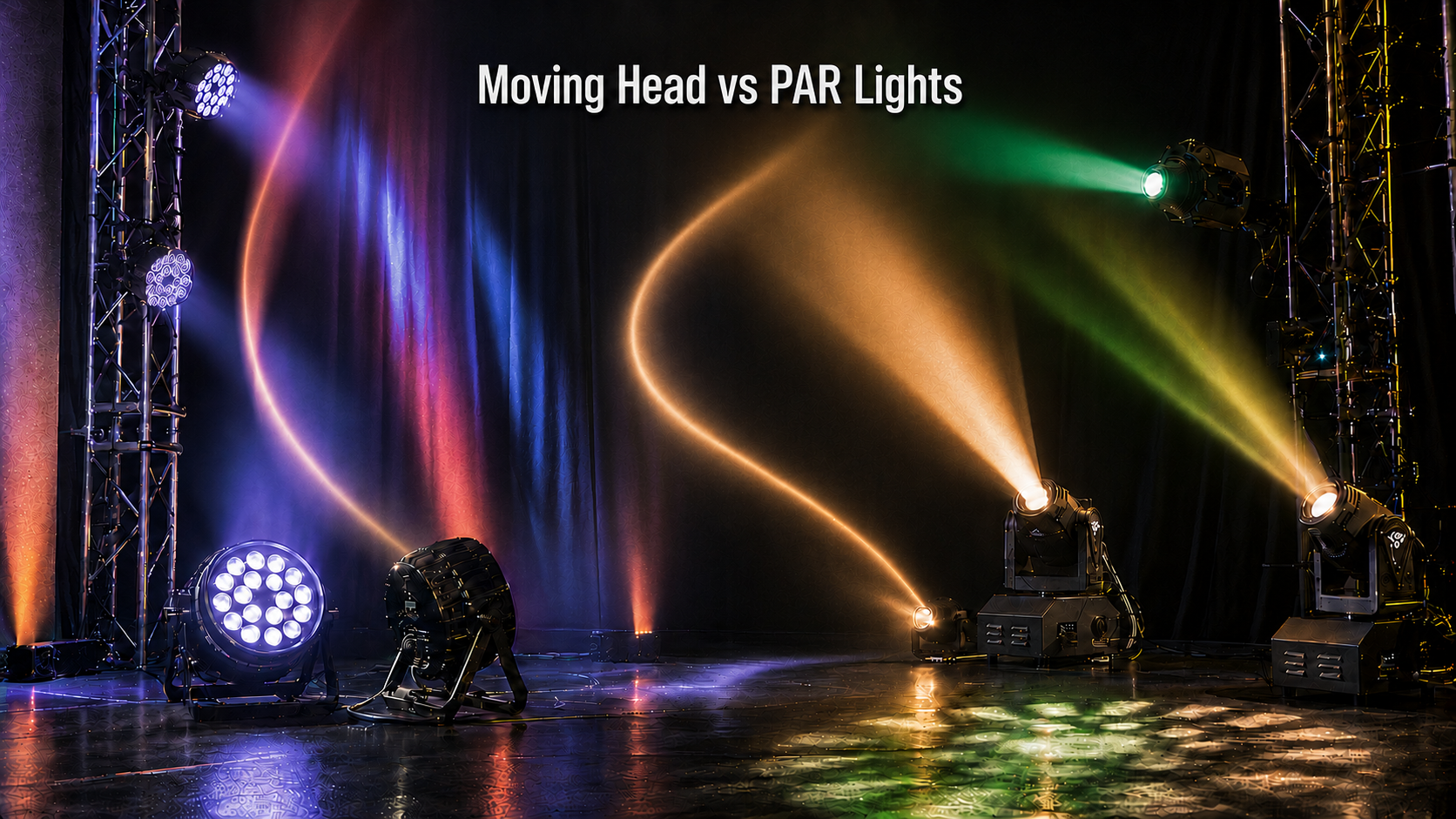
Choose PAR lights when you need affordable, dependable color washes across a stage, wall, dance floor, or performance area. Choose moving heads when the event needs motion, focused beams, gobos, aerial effects, and a more dynamic light show. For many professional events, the strongest design combines both: PAR fixtures establish the visual foundation while moving heads create energy and movement.
The moving head vs PAR lights decision should be based on the atmosphere you want to create, not simply which fixture looks more advanced.
Two Fixtures, Two Different Visual Jobs
Imagine a wedding stage illuminated in a warm color that remains consistent throughout the speeches. That is a natural job for PAR lights. Now imagine sharp beams sweeping across the dance floor as the music builds. That is where moving heads become valuable.
PAR Lights Build the Scene
PAR fixtures produce a fixed beam aimed manually at a chosen area. LED PARs are commonly used to wash surfaces in color, illuminate performers, highlight décor, and establish the overall mood of a venue.
Their strengths include:
- Broad and consistent color coverage
- Compact size and simple positioning
- Lower starting cost
- Minimal mechanical noise
- Easy use for static or slowly changing scenes
Because they contain no motorized pan-and-tilt mechanism, PAR lights remain pointed at the area selected during setup.
Moving Heads Animate the Scene
Moving heads use motorized pan and tilt to reposition their output during a show. Depending on the fixture type, they may produce narrow beams, focused spots, soft washes, patterns, prisms, or rotating effects.
Moving-head spots commonly include color and gobo wheels, while other models may offer zoom, focus, frost, or prisms. Many professional moving-head fixtures include pan, tilt, gobos, and programmable beam effects in a single unit.
Compare the Visual Results Before the Specifications
The most important question is not “Which light is brighter?” It is “What should the audience see?”
A PAR system can change the color of an entire room without distracting from the people on stage. It is ideal when the lighting should support the environment rather than become the main attraction.
Moving heads are designed to be noticed. Their movement can follow musical moments, frame performers, project patterns, and direct attention from one area to another. Haze can make their beams visible in the air, although haze use must suit the venue’s rules and detection systems.
For elegant background color, PARs usually provide better value. For visual excitement, moving heads offer more creative range.
Coverage Depends on Fixture Type and Placement
PAR lights can provide broad coverage when several units are spaced evenly. They work well for stage washes, wall uplighting, truss color, and decorative illumination. However, one PAR cannot automatically illuminate an entire venue; beam angle, output, throw distance, and mounting position still matter.
Moving heads can redirect light across multiple areas, but movement does not replace coverage. A narrow moving beam may create impressive effects while leaving performers poorly illuminated.
This distinction matters:
- PARs provide the visual base.
- Moving heads provide changing direction and emphasis.
- Neither fixture should be expected to perform every lighting role alone.
When browsing professional lighting and event equipment, compare beam angle and intended fixture type alongside output and control options.
Control and Setup: Simple Does Not Mean Limited
PAR lights are normally quicker to position and focus because the fixture remains fixed. Many models can display static colors or built-in programs without a controller. DMX becomes useful when several fixtures must change color, intensity, or timing together.
Moving heads can also run automated or sound-activated programs, but programmed control produces more intentional results. Pan, tilt, speed, color, dimming, gobos, and other functions may each require control channels.
The physical setup is also more demanding. Moving heads must have enough clearance to rotate freely and require secure mounting appropriate to their weight and movement. Suspended fixtures need suitable clamps, rated structures, and safety cables. The completed rig should be tested through its full movement range before guests arrive.
Cost Is More Than the Fixture Price
PAR lights normally provide more coverage per dollar when the purpose is a color wash. Their simpler construction also makes it practical to purchase several fixtures and distribute them around a venue.
Moving heads usually cost more because they contain motors, mechanical assemblies, and additional optical features. A complete moving-head system may also require stronger cases, suitable clamps, control equipment, and additional programming time.
Before setting a budget, include:
- Fixtures and controllers
- Clamps, stands, trussing, and safety cables
- Power and data cables
- Protective cases
- Haze equipment where permitted
- Setup, programming, and operator time
A smaller number of well-positioned lights will usually produce a cleaner result than many fixtures added without a design plan.
Which Light Fits Your Event?
Weddings
PAR lights are excellent for uplighting walls, illuminating décor, and creating flattering color around a stage or sweetheart table. Moving heads can add energy during entrances and dancing, but their movement should be restrained during formal moments.
DJ Events
Moving heads suit dance floors because they respond well to energetic programming, beam movement, gobos, and music-based effects. PARs remain useful for booth lighting, truss washes, and maintaining color when moving effects pause.
Concerts
Concerts often benefit from both. PARs provide stage color and performer visibility, while moving heads create transitions, aerial effects, and visual accents that follow the music.
Theaters
PAR fixtures can support stable scene washes and color zones. Moving heads provide flexible focus, repositioning, patterns, and scene changes, but fan and motor noise should be considered in quiet productions.
Small Venue or Large Venue?
For a small room, café stage, or simple ceremony, several PAR lights may provide everything required. Moving heads can feel excessive if there is little mounting height or insufficient distance for their beams to develop.
Medium venues can use PARs as the main wash and add two or four moving heads for controlled effects. Large venues may need higher-output fixtures, wider distribution, multiple lighting positions, and professional control.
Venue size alone is not enough. Ceiling height, stage width, throw distance, ambient light, audience sightlines, and available power all influence the final design.
Should You Combine Moving Heads and PAR Lights?
Yes, when the budget and event justify it. Combining them prevents one fixture type from being forced into the wrong job.
Start by using PARs to create an even base color. Add moving heads behind, beside, or above the performance area for beams and movement. Keep the color palette coordinated so the two systems feel like one design.
If you are unsure about fixture quantities, beam angles, mounting, or controller compatibility, visit Contact Us before ordering.
A Fast Buying Decision
Choose PAR lights for budget-friendly washes, uplighting, quiet operation, small stages, and decorative events.
Choose moving heads for dance floors, concerts, clubs, theatrical effects, and shows requiring motion or patterns.
Choose both when the event needs dependable coverage plus moments of visual excitement. A balanced system will usually look more professional than relying entirely on movement or static color.
Frequently Asked Questions
Can PAR lights move automatically?
Standard PAR lights cannot physically pan or tilt. Their color, brightness, and effects may change electronically, but their direction remains fixed.
Do moving heads require DMX?
Not always. Many offer automated or sound-active modes, but DMX provides more precise and coordinated control.
Are moving heads suitable for weddings?
Yes. They work well for entrances and dancing, while slower movement and restrained effects suit formal moments.
How many lights should I buy?
The quantity depends on venue dimensions, beam angle, mounting position, output, and desired coverage, not guest count alone.