
What Is a PA System and How Does It Work? A Beginner’s Guide
Jul 19th 2026
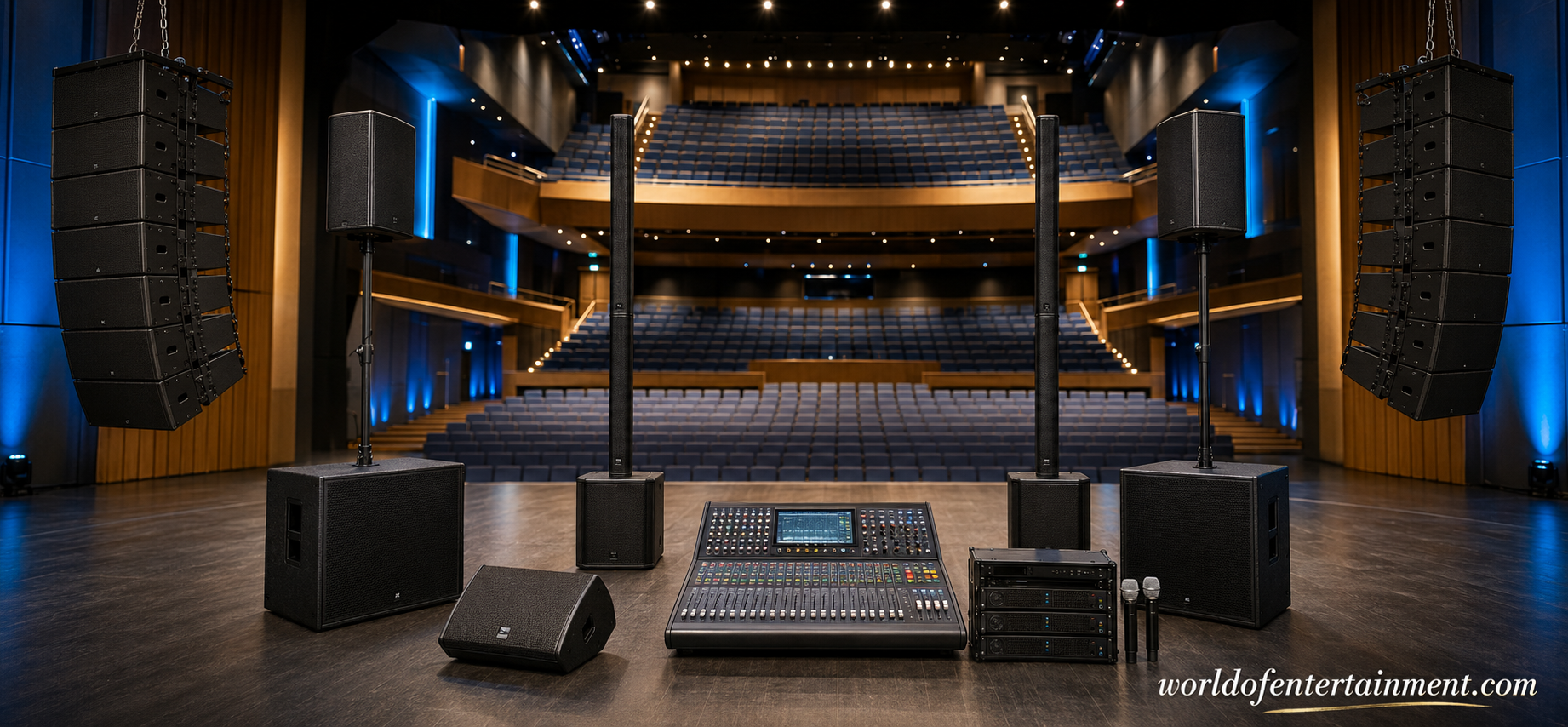
What Is a PA System and How Does It Work?
Whether you are attending a concert, listening to a speaker at a conference, or singing karaoke at a private party, there is a good chance a PA system is making the sound clear and loud enough for everyone to hear.
PA systems are used in many places, but they are often misunderstood. Some people think a PA system is simply a pair of loudspeakers. In reality, it is a complete setup made up of several components that work together to capture, process, amplify, and distribute sound.
In this guide, we will explain what a PA system is, how it works, and what equipment is typically included in one.
What Is a PA System?
A PA system, short for public address system, is a collection of audio equipment used to amplify sound for an audience. It takes sound from a source, such as a microphone, musical instrument, or media player, and makes it loud enough to be heard clearly across a room or outdoor area.
PA systems come in many different sizes. A small portable system might be used for a classroom, business presentation, or backyard party. A larger professional setup may be required for a concert, festival, theatre production, or major corporate event.
Although the size and complexity can vary, every PA system has the same basic purpose: to deliver clear and balanced sound to the intended audience.
How Does a PA System Work?
A PA system works by moving an audio signal through several connected stages. The process begins when sound enters a microphone or another input device and ends when that sound comes through the loudspeakers.
The basic signal path looks like this:
Sound source → Input device → Mixer → Amplifier → Loudspeakers
Each part has a specific role in the process.
1. The Sound Is Captured
The first stage begins with an audio source. This could be:
- A person speaking into a microphone
- A singer performing on stage
- A guitar, keyboard, or other musical instrument
- A laptop, smartphone, or media player
- A DJ controller or playback system
A microphone converts acoustic sound into an electrical audio signal. Electronic instruments and media devices can send an audio signal directly into the system.
At this point, the signal is usually too weak, or not properly controlled, to drive a loudspeaker on its own. It must first travel to the mixer.
2. The Audio Signal Enters the Mixer
The mixer acts as the control centre of the PA system. It accepts signals from microphones, instruments, and playback devices, allowing the operator to manage them from one place.
For example, a band might have several microphones, guitars, keyboards, and other sources connected at the same time. The mixer allows the sound engineer to adjust the volume of each input so that one source does not overpower the others.
A mixer can also be used to control:
- Tone and equalization
- Input gain
- Panning
- Monitor mixes
- Effects such as reverb and delay
- The overall output level
Mixers are available in both analogue and digital formats. Analogue mixers are often straightforward and easy to operate, while digital mixers usually offer more advanced processing and greater control.
The right choice depends on the size of the event, the number of inputs, and the experience of the person operating the system.
3. The Signal Is Processed
Before the signal reaches the loudspeakers, it may need some adjustment. This process helps improve clarity, balance the sound, and prevent unwanted problems.
Equalization, commonly called EQ, is used to adjust different frequency ranges. For instance, excessive low frequencies can make speech sound muddy, while too much high-frequency energy may make it harsh or tiring to listen to.
Compression can help control sudden changes in volume. Noise gates may reduce background noise when a microphone is not being used. Effects such as reverb can add space and character to vocals or instruments.
In a simple PA system, many of these controls may already be built into the mixer. Larger professional systems may use additional signal-processing equipment or digital speaker-management systems.
4. The Signal Is Amplified
Once the audio has been mixed and processed, it needs enough power to operate the loudspeakers. This is the job of the amplifier.
There are two common ways amplification is handled.
A passive speaker requires a separate external power amplifier. The mixer sends the audio signal to the amplifier, and the amplifier provides the power needed by the speaker.
An active speaker, also known as a powered speaker, has an amplifier built inside its enclosure. It can receive the signal from the mixer without needing a separate external amplifier.
Powered speakers are popular for smaller events, mobile DJs, presentations, and portable setups because they reduce the number of separate components required. Passive systems are often used when greater flexibility, centralized amplifier control, or a more permanent installation is needed.
Neither option is automatically better in every situation. The most suitable arrangement depends on the venue, required sound level, available space, and how the equipment will be used.
5. The Loudspeakers Deliver the Sound
The final stage of the signal path is the loudspeaker. It converts the amplified electrical signal back into sound waves that the audience can hear.
Speaker placement has a major effect on how well a PA system performs. Even high-quality equipment can sound poor if the speakers are positioned incorrectly.
Main speakers are generally placed in front of the performers and directed toward the audience. Raising them above head level can help the sound travel more evenly across the space.
Larger venues may need additional speakers to provide consistent coverage. The goal is not simply to make the system as loud as possible. A well-designed PA setup should allow people in different parts of the venue to hear the sound clearly at a comfortable level.
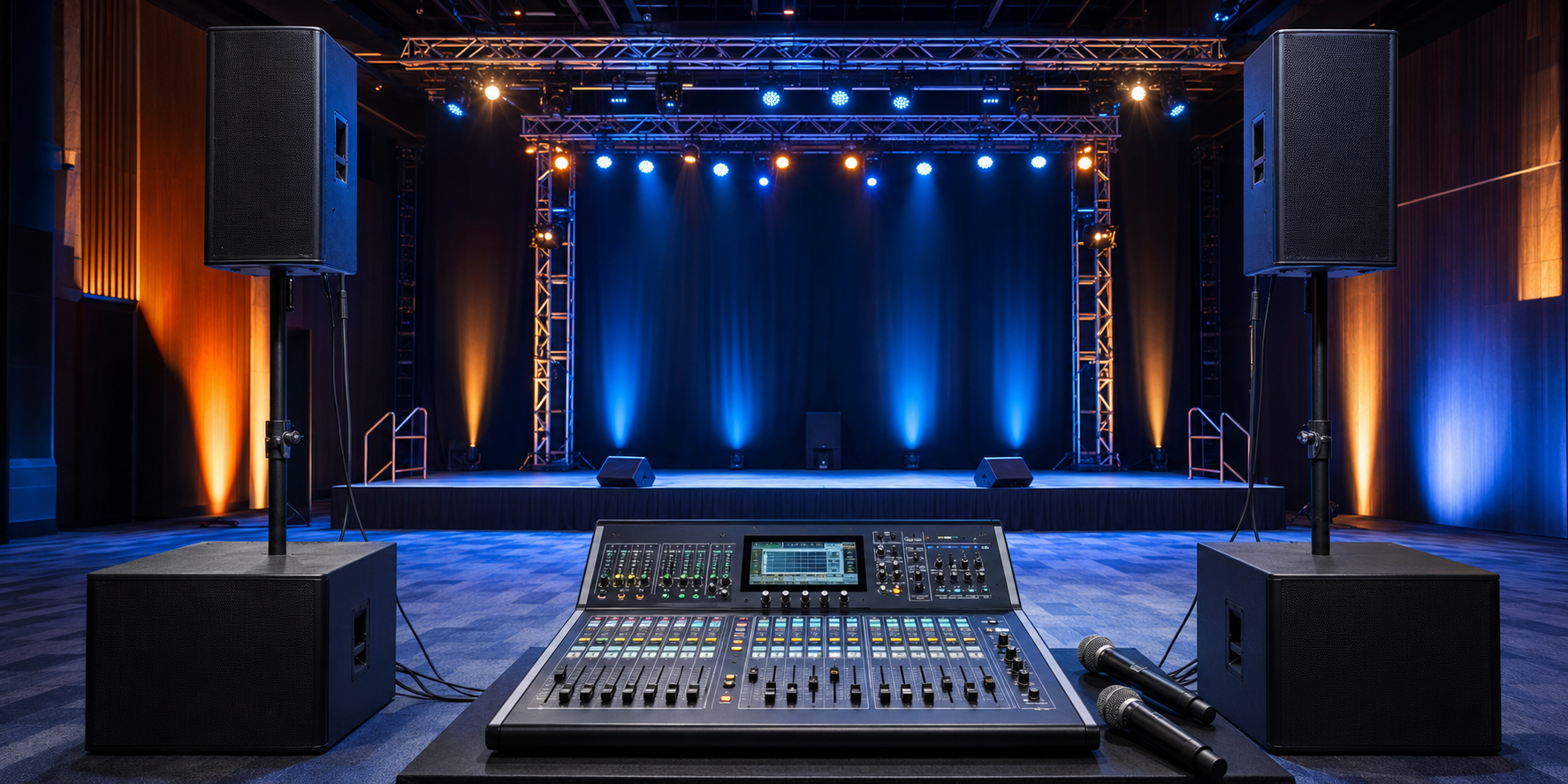
What Equipment Is Included in a PA System?
The exact equipment depends on how and where the system will be used. However, a typical PA setup may include the following components.
Microphones
Microphones capture vocals, speech, instruments, and other sounds. They can be wired or wireless and may be designed for handheld use, instruments, presentations, or stage performances.
Different microphones respond to sound in different ways, so selecting the appropriate type is important.
Audio Mixer
The mixer combines and controls all incoming audio signals. Small mixers may provide only a few inputs, while professional consoles can manage dozens of channels at once.
Amplifier
An amplifier provides power to passive loudspeakers. It is not required as a separate component when powered speakers are being used.
Main Loudspeakers
Main speakers deliver the primary sound to the audience. Their required size, power, and number will depend on the venue and event.
Subwoofers
Subwoofers reproduce low-frequency sounds, including bass guitar, kick drums, and the deeper elements of recorded music.
They are not essential for every PA system. A speech-only presentation may not require them, but they can make a noticeable difference at concerts, DJ events, and other music-focused occasions.
Stage Monitors
Performers need to hear themselves and the other members of the group. Stage monitors are speakers placed near the performers and directed toward the stage rather than the audience.
Some performers use in-ear monitoring systems instead. These send a personalized monitor mix directly to earpieces worn by the performer.
Cables and Stands
Audio cables, power cables, microphone stands, and speaker stands may appear to be minor accessories, but they are essential to a safe and dependable setup.
Using the correct cables helps prevent signal problems, electrical noise, and unreliable connections.
Different Types of PA Systems
PA systems can generally be grouped according to their size and intended application.
Portable PA Systems
Portable systems are designed for quick transportation and straightforward setup. Some models combine a mixer, amplifier, and speaker in a single unit.
They are commonly used for:
- Public speaking
- Fitness classes
- Small parties
- School activities
- Street performances
- Small business events
Small Venue PA Systems
A small venue system may include two powered main speakers, a compact mixer, several microphones, and possibly one or two subwoofers.
This kind of setup can work well for small bands, community events, houses of worship, karaoke nights, and private functions.
Large Professional PA Systems
Concerts, festivals, theatres, and major event spaces need more advanced sound systems. These setups may include line-array speakers, multiple subwoofers, digital mixing consoles, stage-monitor systems, wireless equipment, and dedicated signal processing.
They are normally designed and operated by trained audio professionals because correct configuration, timing, coverage, and safety become increasingly important as the system grows.
What Is the Difference Between a PA System and a Home Stereo?
A home stereo is primarily designed to reproduce recorded music in a relatively small and controlled space. A PA system is built to handle live microphones, instruments, and multiple sound sources while covering a larger audience area.
PA equipment is also designed to operate at higher sound levels and often needs to withstand regular transportation, setup, and extended use.
A home speaker may sound excellent in a living room, but that does not mean it is suitable for a live performance or public event.
How Much Power Does a PA System Need?
There is no single power rating that works for every event. The required output depends on several factors, including:
- The size and shape of the venue
- Whether the event is indoors or outdoors
- The number of people attending
- Whether the system is used for speech or music
- The style of music being performed
- The efficiency and placement of the speakers
- The level of background noise
Outdoor events often require more sound coverage because there are fewer surfaces to contain and reflect the sound. A live band will also usually need more output than a spoken presentation.
Wattage alone does not tell the full story. Speaker efficiency, maximum sound pressure level, coverage pattern, and system design are also important. A properly positioned and balanced system can often perform better than a more powerful system that has been set up poorly.
What Causes Feedback in a PA System?
Feedback is the loud ringing or squealing noise that occurs when a microphone picks up sound from a speaker and sends it through the system repeatedly.
It often happens when:
- A microphone is placed too close to a speaker
- A microphone is pointed toward a speaker
- The gain or volume is set too high
- Too many microphones are left open
- Problem frequencies have not been controlled
Feedback can often be reduced by placing the main speakers in front of the microphones, setting the input gain correctly, and using EQ carefully.
Turning everything up is rarely the right solution. Good sound depends on proper gain structure, sensible speaker placement, and controlled volume levels.
How to Choose the Right PA System
Before selecting a system, consider what you actually need it to do.
Start by answering a few practical questions:
- What type of event will it be used for?
- How large is the audience?
- Is the venue indoors or outdoors?
- Will it handle speech, music, or both?
- How many microphones and instruments are required?
- Does the equipment need to be portable?
- Will a trained sound engineer operate it?
A simple powered-speaker setup may be ideal for presentations and smaller events. A band or DJ may need subwoofers, more mixer inputs, and additional monitoring. Larger productions require a system designed around the venue rather than a collection of equipment chosen only by power ratings.
It is also wise to plan for future needs. A system with a few spare mixer inputs and flexible connection options can be easier to expand later.
Final Thoughts
A PA system is much more than a loudspeaker. It is a complete audio chain that captures sound, allows it to be mixed and processed, amplifies the signal, and distributes it clearly to an audience.
Understanding that signal path makes it easier to choose equipment, connect the system correctly, and solve common sound problems. The best PA system is not necessarily the biggest or loudest one. It is the system that provides clear, balanced, and reliable sound for its intended space and audience.
Whether you are preparing for a presentation, karaoke night, live performance, or full-scale production, good results begin with the right equipment and a properly planned setup.
Every sound setup has different requirements. If you need help planning the right PA system for your space or event, please contact us for more information and expert guidance.
Frequently Asked Questions
What does PA stand for in audio?
PA stands for public address. A public address system amplifies speech, music, or other audio so it can be heard by a group of people.
Can a PA system be used for music?
Yes. PA systems are commonly used for live bands, DJs, karaoke, recorded music, and other performances. The system must be appropriately sized and configured for the venue and type of music.
Do powered speakers need an amplifier?
Powered speakers contain built-in amplifiers, so they do not require a separate external power amplifier. They still need an audio signal and an electrical power connection.
Does every PA system need a mixer?
Not always. Some portable PA speakers have built-in microphone and media inputs. However, a separate mixer provides more control and is usually needed when several microphones, instruments, or other sources are connected.
Does a PA system need a subwoofer?
Not in every situation. Speech-focused systems can often work without one. Subwoofers are more useful for live music, DJs, karaoke, and events where strong low-frequency reproduction is important.